AI Trading Intelligence
AI system architecture and trading decision interfaces
AlphaFlux engaged Mercury to strengthen an AI-enabled trading decision system where judgment had to remain inspectable under time pressure.
The work connected domain modeling, behavior evaluation, uncertainty, context, runtime observation, and product UX around one operating contract: the system could organize evidence and surface a view, while a human retained authority over consequential action.
The Objective
AlphaFlux needed to move beyond a promising model experience and establish a dependable product architecture around the decisions its users were making. The assignment was broader than model tuning. The system had to show what informed a judgment, recognize when evidence was weak or conflicting, and give the operator enough context to review the output before acting.
Mercury’s objective was to turn those requirements into working product behavior. That meant defining the decision surface, connecting it to the domain model, building evaluation into change review, and making confidence, warnings, evidence, and abstention visible in the interface.
The engagement also needed a clear authority boundary. AlphaFlux could assist with analysis, organize relevant evidence, and make uncertainty legible. The operator remained responsible for the decision. That boundary shaped the model behavior, runtime controls, and product experience from the beginning.
Challenge
A convincing model output can carry an AI product through its first demonstration. It does not tell the team whether the next version preserved an important warning, weakened a refusal path, or changed its judgment because a new source entered the context. Those gaps become operating risks once users begin to depend on the product.
The trading domain intensified the problem. Incomplete evidence can still look decisive, and technical sophistication can be mistaken for demonstrated performance. AlphaFlux needed a system that could distinguish a well-supported judgment from a thin one without hiding uncertainty behind a polished answer.
Context added another layer of risk. A broad retrieval path could introduce stale or irrelevant material. A narrow path could omit evidence the operator needed. Without explicit rules for what could be retained, retrieved, excluded, and shown, the team would struggle to determine whether a weak output came from the model, the program, or the evidence assembled around it.
Change ownership was distributed across model work, runtime engineering, monitoring, and interface design. If those disciplines used different definitions of acceptable behavior, the operator would inherit the gaps. AlphaFlux needed one contract that could govern the full path from evidence to judgment to human action.
Solution
Define the decision surface
Mercury began with the operating decision rather than the model architecture. The team defined what the user was trying to understand, which domain concepts had to be represented, what evidence should accompany a judgment, and which conditions should narrow or stop the system’s response.
That decision surface gave the engagement a shared reference. Domain modeling had to support distinctions the operator would actually use. Context had to bring forward relevant evidence without treating retrieval volume as a substitute for judgment. The interface had to expose the basis and limits of the system’s view at the moment of use.
Give uncertainty visible behavior
Mercury paired confidence policy with explicit abstention behavior. Weak, conflicting, or insufficient evidence could change what the system did. It could narrow a response, show a warning, or decline to offer a broad judgment rather than forcing every input into a confident answer.
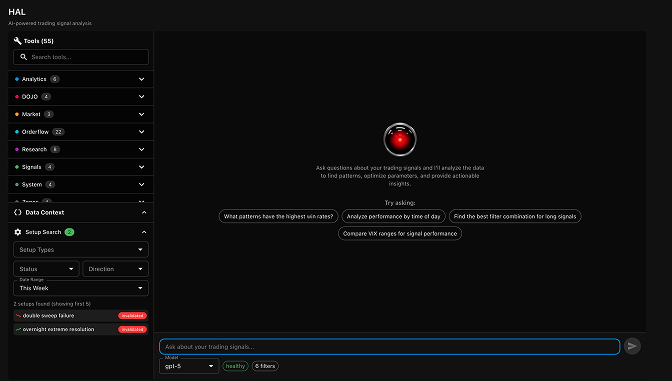
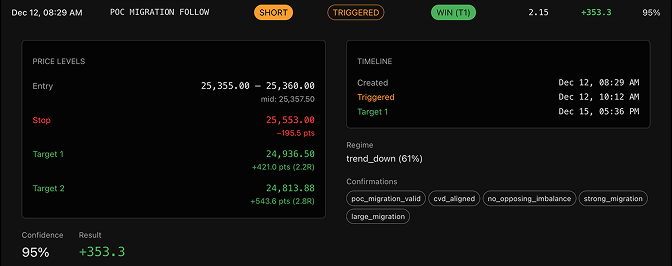
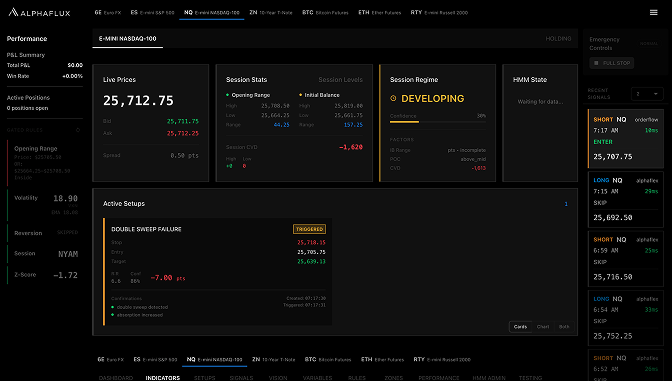
Those states were designed for the operator, not left inside model traces. The product surfaced the evidence attached to a judgment, communicated uncertainty in plain terms, and made abstention understandable as an intentional system behavior.
Context and memory followed the same discipline. Mercury defined what the system could retain, retrieve, exclude, and display for a decision. This made context assembly inspectable in its own right. When an output needed investigation, the team could examine model behavior alongside the evidence set that shaped it.
Turn change into a review object
Mercury used evaluation examples to describe expected judgment, warning, refusal, and evidence handling. Proposed model or program changes could be run against that behavior contract, with differences reviewed before acceptance.
Evaluation therefore became part of product governance. A change that improved one class of answer while weakening an abstention path created a visible tradeoff for review. The team gained a practical way to inspect behavior changes before they reached the operator.
Runtime observation extended that discipline after acceptance. Monitoring was included in the architecture because models, programs, and context sources evolve. The operating loop connected expected behavior, pre-change evaluation, post-change observation, and the next review cycle.
The decision interface completed the system. Evidence, confidence, warnings, and abstention arrived in one human control surface. Model design, evaluation, runtime engineering, and UX worked from the same decision contract rather than meeting for the first time at release.
Results
The engagement gave AlphaFlux a coherent architecture for governing an AI-assisted trading decision. The system’s domain representation, behavior evaluations, confidence policy, context rules, monitoring, and operator interface were connected around the decision they had to support.
AlphaFlux also gained a reviewable path for future change. Model and program updates could be evaluated against expected behavior. Context failures could be investigated separately from model failures. Warning and abstention states had visible product consequences. The operator could inspect the evidence and uncertainty attached to a judgment before deciding what to do.
For Mercury, the completed work demonstrates the depth of a custom AI engagement where model behavior cannot be separated from evaluation, runtime discipline, and product UX. The result is engineering and product-delivery evidence. This case does not make claims about trading performance, profitability, returns, latency improvement, live trading, production operation, adoption, or commercial impact.
Summary
AlphaFlux came to Mercury with a demanding product problem: turn AI-assisted trading analysis into a decision system that could show its work, express uncertainty, and keep consequential authority with a person. Mercury answered that problem by designing the decision surface and carrying its requirements through domain modeling, evaluation, context, monitoring, and the interface.
The engagement established a durable operating contract for the product. Evidence travels with judgment. Weak support changes the system’s behavior. Proposed changes become review objects. The human operator remains accountable for the action.
For teams building consequential AI products, this is the useful starting point: define the decision, the evidence that must accompany it, the conditions that should stop the system, and the person who owns the outcome. Those answers determine whether the product has an operating contract strong enough to support continued development.
Platform